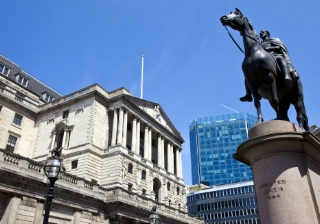
Case for hiking rates is growing, MPC member says
Greene has hinted at future rate rises, arguing for a 'proactive approach' to growing inflation.

"I think the case for hiking rates grows as the conflict wears on and believe a tightening in monetary policy over the next few weeks or months may be necessary."
Megan Greene, member of the Bank of England's Monetary Policy Committee, has put the possibility of interest rate hikes back on the table.
In a recent speech, Greene says she sees a growing case for increases to Bank Rate, stating that "a more proactive approach may be needed to lean against inflation when an economy has been hit by successive supply shocks."
Greene voted to keep interest rates unchanged at 3.75% in April, but said "an increase in Bank Rate may be necessary in upcoming meetings".
In her speech Greene noted the several ways in which energy price shock affect inflation, including direct effects of higher energy prices and indirect effects of higher input costs, for example the pass-through of higher energy costs by firms and higher wage demands feeding through to prices.
"The conventional response of monetary policymakers to an energy shock is to look through it... but, as I have argued in the past, a more nuanced view is necessary given successive negative supply shocks", Greene said.
She added: "In my view, the risk of acting, even if inflation proves to be less persistent, is less severe than the risk of failing to act.
"I think the case for hiking rates grows as the conflict wears on and believe a tightening in monetary policy over the next few weeks or months may be necessary."
Greene's outlook is in contrast to Bank of England governor Andrew Bailey, who took a more dovish approach in a speech last week. He believes the Bank has already effectively tightened monetary policy by taking the prospect of future rate cuts off the table.
Bailey added: "Responding too early may generate undesirable volatility in output – and inflation may drop below the 2% target in the medium term if second-round effects turn out smaller than anticipated.
"Our decision to hold Bank Rate at 3.75% at our most recent meeting was an active choice given the range of possible outcomes."

Breaking news
Direct to your inbox:
More
stories
you'll love:
This week's biggest stories:
Iress
Iress expands mortgage and protection distribution through new Access FS platform

FCA
Advice firm employees plead guilty after defrauding clients of £2m
Atom Bank
Try Mortgage Network adds Atom Bank to residential mortgage panel
FCA
MPs call for investigation into FCA's treatment of whistleblowers
This week's biggest stories:
Iress
Iress expands mortgage and protection distribution through new Access FS platform
FCA
Advice firm employees plead guilty after defrauding clients of £2m
Atom Bank
Try Mortgage Network adds Atom Bank to residential mortgage panel
FCA
MPs call for investigation into FCA's treatment of whistleblowers
Mortgage Rates
Average five-year fixed rate mortgage hits 6%

Inflation
Inflation could return to target by end of 2027, economist predicts