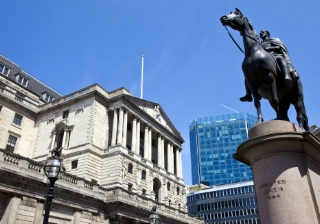
Interest rates could rise as Bank of England responds to oil shock
There is growing market speculation that the Bank of England could increase rates as a direct consequence of the ongoing Iran-related conflict.

UK interest rates could rise following market turmoil caused by the Iran war, industry experts predict.
Yesterday, Rachel Reeves warned that escalating conflict in West Asia is likely to increase inflation as oil and gas prices remain elevated.
The Chancellor said: "The economic impact of the situation in the Middle East will depend on its severity and its duration. The movements that we have already seen are likely to put upward pressure on inflation in the coming months."
The British Chamber of Commerce predicts that CPI inflation will remain elevated at 2.7% by the end of the year, down from previous forecasts of 2.1%.
As a result, the Bank of England is now expected to hold interest rates, reversing previous expectations of two further rate cuts this year.
Markets now predict there’s just a 20% chance that the Bank of England will lower interest rates at its next meeting, down from 80% two weeks ago.
Some industry experts even predict that, after keeping interest rates on hold in 2026, there could be a rise towards the end of the year or into 2027.
The National Institute of Economic and Social Research (NIESR) predicts that a prolonged energy price shock means rates could rise above 4%, from the current 3.75%, by the end of the year.
Daniela Hathorn, senior market analyst at Capital.com, commented: "There is growing market speculation that the Bank of England could move in a tighter direction, even edging toward a rate increase, as a direct consequence of the ongoing Iran-related conflict and its knock-on effects on energy prices and inflation.
"Prior to the escalation, markets had been positioning for further interest-rate cuts in 2026 as inflation moderated. However, the disruption to global oil and gas supplies, particularly via closures and threats around the Strait of Hormuz, has driven oil close to four-year highs and pushed UK energy costs sharply higher. This has raised the risk that inflation may rebound or remain more persistent than previously expected, slowing or negating the expected easing cycle.
"As a result, traders have significantly reduced bets on imminent rate cuts and shifted toward pricing in a hold or even an eventual increase above the current 3.75% level, should elevated energy costs translate into broader inflationary pressure, though this is highly dependent on how long the conflict and supply disruptions last. Also, commentary from central bank officials does not suggest that a hike is the path forward, at least for now. The more likely immediate outcome is a pause in rate cuts rather than an outright hike, with further decisions contingent on incoming inflation data and the evolving geopolitical situation."

Breaking news
Direct to your inbox:
More
stories
you'll love:
This week's biggest stories:
Iress
Iress expands mortgage and protection distribution through new Access FS platform

FCA
Advice firm employees plead guilty after defrauding clients of £2m
Atom Bank
Try Mortgage Network adds Atom Bank to residential mortgage panel
FCA
MPs call for investigation into FCA's treatment of whistleblowers
This week's biggest stories:
Iress
Iress expands mortgage and protection distribution through new Access FS platform
FCA
Advice firm employees plead guilty after defrauding clients of £2m
Atom Bank
Try Mortgage Network adds Atom Bank to residential mortgage panel
FCA
MPs call for investigation into FCA's treatment of whistleblowers
Mortgage Rates
Average five-year fixed rate mortgage hits 6%

Inflation
Inflation could return to target by end of 2027, economist predicts