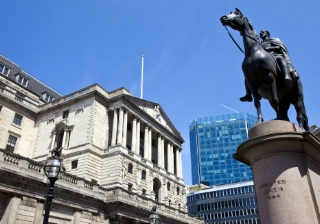
Bank of England holds interest rates as inflation risks persist
The conflict in West Asia has raised concerns about global energy prices, inflation, and market volatility.

The Bank of England's Monetary Policy Committee has voted unanimously to maintain Bank Rate at 3.75%.
Before the Iran war began three weeks ago, markets predicted an 80% chance that the MPC would lower interest rates at its next meeting. However, that later plummeted to just 20% as the conflict in West Asia raised concerns about global energy prices, inflation, and market volatility.
Higher oil prices are expected to keep inflation firmly above the Bank of England’s 2% target, with potential rate rises later this year now being priced in by the market.
In its latest minutes, the MPC said: "Conflict in the Middle East has caused a significant increase in global energy and other commodity prices, which will affect households’ fuel and utility prices and have indirect effects via businesses’ costs. CPI inflation will be higher in the near term as a result of the new shock to the economy."
Charlie Ambler, co-chief investment officer at Saltus, commented: “As the conflict in the Middle East continues to escalate, increased oil prices are poised to push up the headline rate of inflation to near double the Bank of England’s 2% target. This is a direct threat to the Bank’s slow and steady rate cutting cycle, with markets now increasingly pricing in a change of course.
“While rates have been held at 3.75% today, hikes later this year are now being priced in by the market. However, this depends entirely on how long the conflict goes on and oil prices remain elevated. While markets will be looking for reassurance amid this uncertain backdrop, any forward guidance will likely remain cautious."
Jeremy Batstone-Carr, European Strategist at Raymond James Investment Services, said: “Immediately prior to the onset of hostilities in and around the Persian Gulf, a seventh rate cut in the current cycle looked certain. In a post-meeting press conference last month, Bank Governor Mr. Andrew Bailey noted that a 3.25% rate represented a “reasonable market curve”, a clear indication that further policy easing was, at that point, in the pipeline.
“Unsurprisingly, the war in the Middle East changed all that. Higher energy prices, if sustained, will result in higher headline inflation. The question asked prior to the meeting’s commencement was whether the conflict might delay anticipated rate cuts, prevent them indefinitely, or even cause them to be reversed. Fast-moving developments have resulted in skittish financial markets edging to the latter position, but not imminently.
“Fortunately, the next MPC meeting is not scheduled until the very end of April, providing time for a negotiated ceasefire or alternatively, more economic data points on which to base a more considered decision. But for now, senior officials took the view that the most prudent course of action was to maintain the status quo as the ongoing conflict unfolds.”
Kevin Shaw, national sales managing director at LRG, commented: "The Bank of England sitting on its hands today will not come as any great surprise. Only a few weeks ago, a cut looked quite likely, but the renewed instability in the Middle East and the inflationary shadow cast by higher oil prices have clearly made Threadneedle Street a little more cautious.
"That said, the housing market has so far shown a fairly British talent for keeping calm and carrying on. We are not seeing the conflict translate into any meaningful slowdown in agreed sales or new listings, and our application levels from would-be buyers are up 9% on 2025. For all the noise around inflation and geopolitics, plenty of people still want to move and, crucially, are willing to get deals done. The market remains price sensitive, as it has for the past two years, but demand is clearly present.
"I view new sales agreed as the “canary in the coalmine” - they are usually the first thing to drop off if confidence really starts to crack. So far, that canary is still singing.
"Of course, a rate cut would have been welcome. Buyers always prefer a tailwind to a headwind. But one hold does not redraw the map. With six MPC meetings still to come this year, there is still every chance of rates easing later in 2026, and a move on 30 April would be warmly received.
"In the meantime, the property market looks less rattled than some of the commentary around it. The Bank may have delayed its long term objective of reducing interest rates, but from our perspective buyers and sellers are not delaying in their willingness to transact."
Adrian Moloney, lending distribution director at OSB Group, added: “While some borrowers may have been hoping for the first rate cut of the year, a decision to hold reflects ongoing uncertainty in the inflation outlook, particularly given recent geopolitical tensions and pressure on energy prices, and provides a degree of stability that has been largely absent over the past couple of years.
“With affordability still stretched for many households, greater clarity on the outlook for interest rates will be just as important as when and how quickly any future reductions may come. Mortgage pricing continues to respond quickly to wider market volatility, meaning borrowers and lenders alike are still navigating a changing rate environment.
“That means more borrowers may begin to revisit plans that were put on hold, particularly home buyers and movers who have been waiting for a more stable rate environment before committing.”

Breaking news
Direct to your inbox:
More
stories
you'll love:
This week's biggest stories:
Iress
Iress expands mortgage and protection distribution through new Access FS platform

FCA
Advice firm employees plead guilty after defrauding clients of £2m
Atom Bank
Try Mortgage Network adds Atom Bank to residential mortgage panel

FCA
MPs call for investigation into FCA's treatment of whistleblowers

This week's biggest stories:
Iress
Iress expands mortgage and protection distribution through new Access FS platform
FCA
Advice firm employees plead guilty after defrauding clients of £2m
Atom Bank
Try Mortgage Network adds Atom Bank to residential mortgage panel
FCA
MPs call for investigation into FCA's treatment of whistleblowers
Mortgage Rates
Average five-year fixed rate mortgage hits 6%

Inflation
Inflation could return to target by end of 2027, economist predicts